How Compound Interest Actually Works (And Why It Matters)
Compound interest is often described as one of the most powerful forces in personal finance. The idea itself is surprisingly simple:
By Adam Byron on July 13, 2026
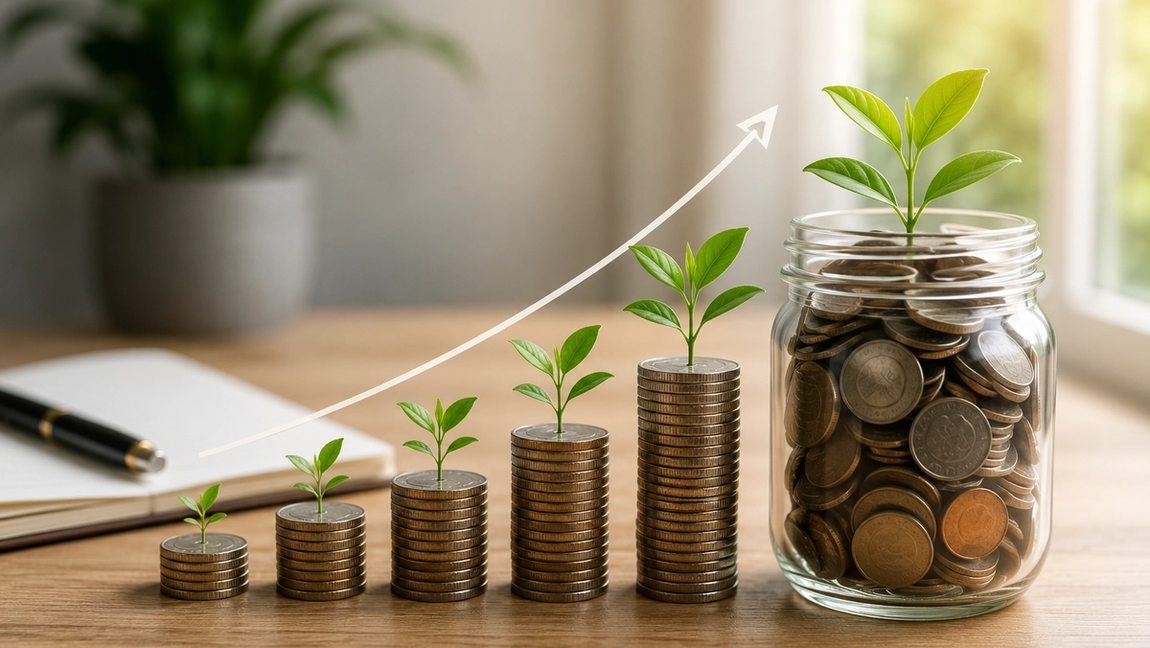
Compound interest is often described as one of the most powerful forces in personal finance.
The idea itself is surprisingly simple: your money earns interest, and then that interest begins earning interest too. Over time, this creates a snowball effect that can turn relatively small amounts into much larger ones.
At first, the growth may seem slow. In fact, during the early years, the difference between simple interest and compound interest may barely feel noticeable. But the longer your money remains invested, the more powerful compounding becomes.
Understanding how compound interest works can change the way you think about saving, investing, debt, and perhaps most importantly, time.
Compound interest means earning returns on your returns
With simple interest, you earn money only on the amount you originally saved or invested. If you invested $1,000 and earned 5% simple interest each year, you would receive $50 annually.
Compound interest works differently. After the first year, you earn interest on your original $1,000. The following year, however, you earn interest on both the original amount and the interest that has already been added.
Imagine investing $1,000 with an annual return of 5%. After the first year, you would have $1,050. During the second year, the 5% return would be calculated on $1,050 rather than only on the original $1,000. Your balance would grow to $1,102.50.
That additional $2.50 may not seem impressive, but the effect becomes much larger as the years pass. Each new return increases the amount that can generate future returns.
Time does most of the work
The most important ingredient in compound growth isn’t necessarily how much money you start with. It’s how much time you give that money to grow.
Someone who begins investing a small amount in their twenties may eventually accumulate more than someone who invests larger amounts but waits until their forties to begin. The earlier investor gives each contribution more time to generate returns, and those returns have more time to produce returns of their own.
This is why starting early can matter more than starting perfectly. You don’t need a large salary or thousands of dollars to benefit from compounding. Even modest contributions can become meaningful when they’re invested consistently over a long period.
Waiting until you can invest a “significant” amount may mean losing years of potential growth. Starting small gives time the opportunity to work in your favor.
Consistency can matter more than large contributions
Many people assume investing is only worthwhile if they have a large amount of money available. In reality, regular contributions can be remarkably powerful.
Imagine setting aside a manageable amount every month rather than waiting for the perfect moment to invest a large lump sum. Each contribution begins its own period of growth, and over time, those deposits and their returns start building on one another.
Consistency also reduces the pressure to predict the perfect time to invest. Instead of trying to guess when markets will rise or fall, you develop a long-term habit of contributing regularly.
The amount you invest still matters, of course. But building a sustainable habit is often more valuable than making one large contribution and never investing again.
Compounding works faster with higher returns—but risk matters
A higher rate of return can dramatically increase long-term growth because even small differences become more significant over many years.
However, higher potential returns usually come with greater risk. Investments that offer the possibility of stronger growth may also experience periods of decline, and returns are rarely guaranteed.
This is why financial decisions shouldn’t be based only on finding the highest possible return. Your goals, timeline, financial situation, and comfort with risk all matter.
Compounding is most effective when money is given enough time to recover from short-term changes and continue growing. A realistic long-term strategy is often more sustainable than constantly chasing investments that promise unusually high returns.
Compound interest can also work against you
Compounding isn’t always beneficial.
The same principle that helps savings and investments grow can also make debt more expensive. When unpaid interest is added to a balance, future interest may be calculated on a larger amount.
Credit card debt is a common example. If you carry a balance and continue paying only the minimum amount, interest can accumulate quickly. Over time, you may end up paying significantly more than the amount you originally borrowed.
This is why understanding interest rates is important before taking on debt. A percentage that appears small can become expensive when it compounds over months or years.
Compound growth can help build wealth when it’s working for you, but it can create financial pressure when it’s working against you.
Patience is where the real growth happens
One of the hardest things about compound interest is that the most impressive results usually appear later.
During the first few years, progress may feel slow. Your own contributions may account for most of the money in your account, while investment growth seems relatively small.
Over time, that balance can begin to shift. As the account grows, even the same percentage return produces a larger amount. Eventually, your money may generate more growth on its own than it did during the early years.
This is why patience matters. Constantly withdrawing money, stopping contributions, or abandoning a long-term plan because growth feels slow can interrupt the compounding process before it has time to become powerful.
Small decisions today can create more choices tomorrow
Compound interest isn’t only about becoming wealthy. It’s about creating options.
Money that grows over time can help support retirement, education, travel, homeownership, career changes, or greater financial security. The goal isn’t necessarily to accumulate the largest possible number. It’s to give your future self more freedom.
The most important lesson is that you don’t have to wait until you earn more, understand every investment, or have a perfect financial plan before you begin.
Starting with a manageable amount, contributing consistently, understanding the risks, and allowing enough time for growth can be far more effective than waiting for ideal circumstances.
Compound interest may seem slow in the beginning, but that’s part of what makes it so powerful. Its biggest results are created quietly, through small contributions, steady growth, and years of patience.
The earlier you begin, the more time your money has to do some of the work for you.