Why “Authenticity” Became the Most Marketed Word in Business
Authenticity is everywhere in modern business. Brands promise authentic experiences. Leaders are encouraged to show authentic leadership.
By Zoie Fields on July 14, 2026
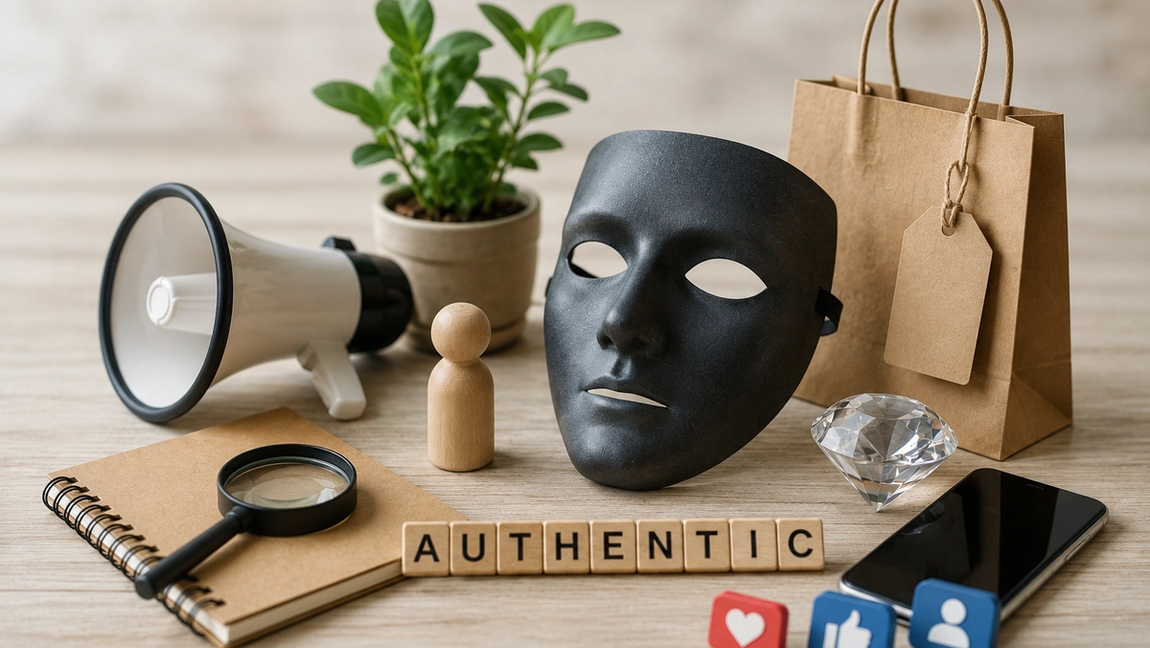
Authenticity is everywhere in modern business.
Brands promise authentic experiences. Leaders are encouraged to show authentic leadership. Companies describe their cultures as authentic, creators build personal brands around authenticity, and marketing campaigns try to make businesses feel more human.
The word appears so often that it has started to lose some of its meaning.
Authenticity originally suggested honesty, consistency, and being true to your values. In business, however, it has increasingly become a strategy.
Companies have realized that people don’t only buy products.
They buy stories, identities, values, relationships, and the feeling that there’s something real behind what they’re purchasing.
As traditional advertising became easier to ignore, authenticity became a new way to earn attention and trust.
The result is a contradiction.
The more businesses try to market authenticity, the more audiences begin questioning whether it’s authentic at all.
Consumers became more skeptical of traditional advertising
For decades, advertising was highly controlled.
Companies created polished campaigns, hired celebrities, used carefully written slogans, and presented products in ideal conditions.
The message was simple: the brand spoke, and the audience listened.
That relationship changed.
People now have access to reviews, social media discussions, online communities, independent creators, and information from other customers.
They can compare products, investigate claims, and publicly challenge companies.
A polished advertisement no longer guarantees trust.
In some cases, perfection creates suspicion.
Consumers understand that professional campaigns are designed to influence them.
They know images are edited, testimonials may be selected carefully, and brand messages are created by marketing teams.
As skepticism increased, businesses began searching for communication that felt more natural.
Authenticity became the answer.
Social media made brands behave like people
Social media changed the way companies communicate.
Traditional advertising involved carefully planned campaigns.
Social platforms require daily interaction.
Brands respond to comments, participate in trends, make jokes, share behind-the-scenes content, and communicate in a more conversational style.
Companies began developing personalities.
Some became funny.
Others became supportive, bold, educational, or intentionally informal.
The goal was to feel less like an organization and more like someone audiences could relate to.
This approach can create stronger relationships.
People may feel connected to brands that communicate openly and understand their experiences.
However, a brand personality is still designed.
The jokes are often reviewed. The informal language follows guidelines. The “spontaneous” content may be planned weeks in advance.
Business communication became more human—but also more carefully constructed to appear human.
People want to know who is behind the business
Customers increasingly care about the people behind products.
They want to understand who founded the company, why it exists, how products are made, and what values influence decisions.
Founder stories became important marketing tools.
A personal experience becomes the reason a product was created.
A small beginning becomes evidence of determination.
Challenges become part of the brand story.
These stories can be genuine.
Many businesses are created because founders experience a problem and want to solve it.
Sharing that experience helps customers understand the company’s purpose.
The challenge begins when every story follows the same structure.
The founder struggled.
The industry was broken.
The company created a better way.
The business changed everything.
Authenticity becomes predictable.
A story designed to feel personal begins sounding like another marketing template.
Vulnerability became a leadership strategy
Business leaders were once expected to appear confident, controlled, and certain.
Modern leadership encourages greater openness.
Executives discuss failures, difficult decisions, personal challenges, and lessons they’ve learned.
This can create trust.
Employees may connect more easily with leaders who admit mistakes and acknowledge uncertainty.
Customers may appreciate seeing the human side of a company.
However, vulnerability can also become a performance.
Personal stories may be shared because they increase engagement.
Failures become carefully edited lessons.
Difficult experiences are presented only after they’ve been resolved successfully.
This doesn’t necessarily make the stories dishonest.
It shows how quickly genuine experiences can become professional content.
When vulnerability becomes a strategy, audiences begin questioning where honesty ends and branding begins.
Influencer culture changed expectations
Influencers built audiences by sharing personal experiences.
Unlike traditional celebrities, they appeared accessible.
They filmed inside their homes, discussed daily routines, shared opinions, and communicated directly with followers.
This created a sense of familiarity.
When influencers recommended products, the message could feel like advice from someone you knew rather than a traditional advertisement.
Businesses recognized the value of that trust.
Influencer marketing grew because personal recommendations often felt more believable than corporate campaigns.
However, as sponsorships became more common, audiences became more cautious.
A personal story might also be an advertisement.
A favorite product might be part of a paid partnership.
The relationship between authenticity and marketing became increasingly difficult to separate.
Employees became part of the brand
Companies now encourage employees to share workplace experiences online.
Behind-the-scenes content, employee stories, office videos, and personal posts can make an organization appear more transparent.
Potential employees may trust workers more than official recruitment campaigns.
Customers may enjoy seeing the people who create products or provide services.
Employee voices can make a company feel real.
However, authenticity becomes complicated when participation is expected.
If employees feel pressure to promote workplace culture publicly, personal expression may become another professional responsibility.
The content may appear spontaneous while being influenced by company expectations.
True employee advocacy is strongest when people choose to share positive experiences—not when enthusiasm becomes part of the job description.
Values became part of marketing
Consumers increasingly expect companies to communicate their values.
Businesses speak about sustainability, diversity, equality, social responsibility, mental health, and community impact.
These commitments can influence real change.
Companies have resources, platforms, and influence that can support important issues.
However, audiences pay attention to whether actions match statements.
A company that promotes sustainability while creating unnecessary waste may face criticism.
A business that celebrates employee well-being while maintaining unhealthy working conditions may appear inconsistent.
Values become meaningful when they influence difficult decisions—not only marketing campaigns.
Authenticity requires alignment.
The message, behavior, and business practices need to support one another.
Audiences became skilled at recognizing performance
People spend years consuming online content.
They recognize marketing language, scripted vulnerability, staged spontaneity, and trends designed to increase engagement.
Attempts to appear authentic can become obvious.
A brand using informal language may feel unnatural if the tone doesn’t match its identity.
A company sharing a mistake may appear strategic if the story avoids meaningful responsibility.
Audiences don’t necessarily expect perfection.
They expect consistency.
A business can be polished and still feel genuine.
It can be professional without pretending to be a friend.
The strongest communication often comes from understanding what the organization actually represents rather than copying the latest version of authenticity.
Authenticity became valuable because trust became scarce
People encounter advertising throughout the day.
Brands compete for attention across social media, websites, podcasts, email, search results, and entertainment.
At the same time, misinformation, edited content, fake reviews, and online scams have made trust more difficult.
Authenticity became valuable because people wanted something they could believe.
They wanted companies that communicated clearly, admitted mistakes, treated employees fairly, protected customers, and delivered what they promised.
The word became popular because the need behind it was real.
People want relationships with businesses that feel honest.
The problem is that once authenticity became valuable, it became something companies tried to manufacture.
Real authenticity is usually less dramatic
Authenticity doesn’t always require emotional stories, informal videos, or public vulnerability.
Sometimes it looks much simpler.
A company explains prices clearly.
A brand admits when a product isn’t right for everyone.
A business responds honestly when something goes wrong.
A leader communicates uncertainty instead of pretending to have every answer.
An organization treats employees according to the values it promotes publicly.
These actions may receive less attention than a carefully designed campaign.
However, they create trust over time.
Authenticity isn’t only a communication style.
It’s the relationship between what a business says and what it repeatedly does.
The future may belong to consistency
The word “authenticity” may eventually become less popular.
Marketing language changes.
New ideas replace old ones.
However, the desire for honesty and trust is unlikely to disappear.
Customers will continue paying attention to whether companies keep promises.
Employees will notice whether workplace culture matches public messaging.
Audiences will compare brand values with business decisions.
The most trusted organizations may not be the ones that describe themselves as authentic most often.
They may be the ones that don’t need to.
Their actions create the message.
Authenticity became one of the most marketed words in business because trust became one of the most valuable things a company could earn.
But trust can’t be created through language alone.
It develops slowly—through consistency, transparency, responsibility, and the willingness to behave the same way when no one is watching.