How to Start a Small Business with No Money
Starting a business is often associated with large investments. People imagine renting an office, purchasing inventory, hiring employees, building an expensive website.
By Adam Byron on July 13, 2026
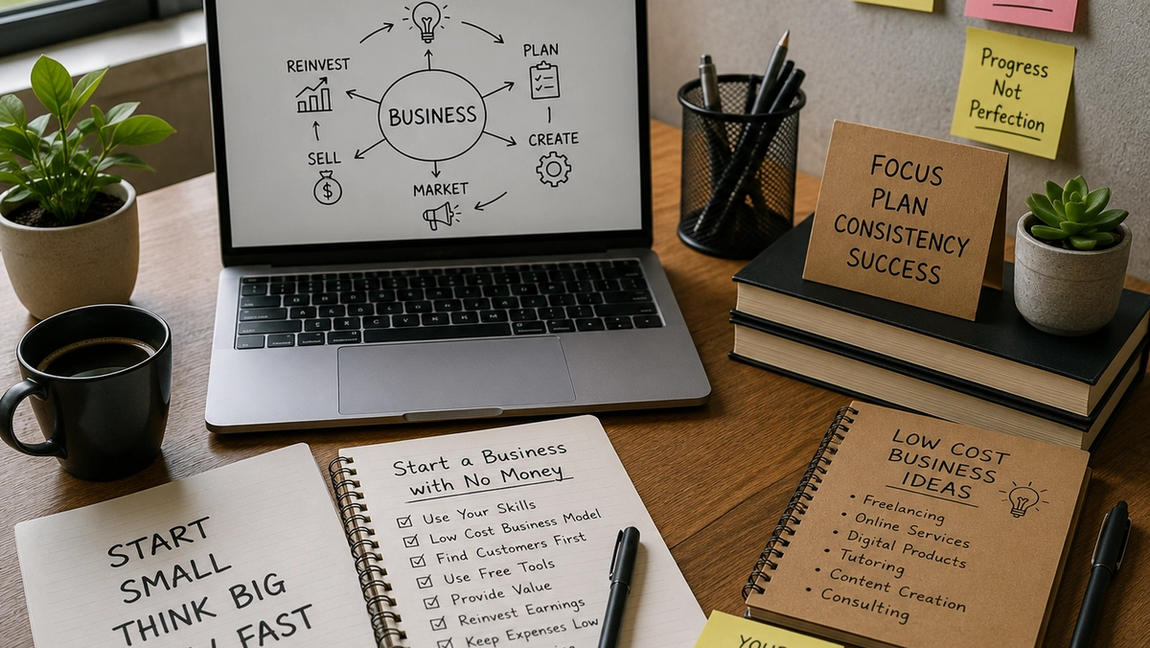
Starting a business is often associated with large investments.
People imagine renting an office, purchasing inventory, hiring employees, building an expensive website, and spending thousands on advertising before making their first sale. While some businesses do require significant funding, many successful businesses begin with far less.
Starting with little or no money doesn’t mean building a business without any resources. You’ll still need to invest time, effort, creativity, and possibly a small amount as the business develops. The key is choosing an idea that doesn’t require large upfront costs and focusing on earning revenue before taking on unnecessary expenses.
You don’t need everything figured out before you begin. In many cases, starting small is one of the best ways to test an idea without taking a major financial risk.
Start with skills you already have
One of the easiest ways to start a business without much money is to sell a skill or service you already know how to provide.
Writing, graphic design, photography, tutoring, translation, social media management, consulting, bookkeeping, virtual assistance, web development, childcare, cleaning, and home repairs are all examples of services that may require little more than your existing knowledge and time.
Think about the problems people already ask you to help solve. Perhaps colleagues regularly ask you to edit their presentations, friends come to you for advice about social media, or local businesses need help creating content.
You don’t have to invent an entirely new product to build a successful business. Often, the best starting point is turning an existing skill into a service people are willing to pay for.
Choose a business model with low startup costs
Some types of businesses are naturally more expensive to launch than others.
Opening a restaurant, manufacturing physical products, or purchasing large amounts of inventory usually requires significant funding. Service-based businesses often cost much less because you’re selling your expertise rather than buying products in advance.
Digital products can also have relatively low startup costs. Templates, guides, online courses, digital artwork, and educational resources can be created once and sold multiple times.
The goal is to choose a business model that allows you to begin with the resources you already have. You can always expand later after the business starts generating income.
Find customers before building everything
Many new business owners spend months designing logos, creating websites, choosing brand colors, and perfecting their social media pages before speaking to a single potential customer.
Branding can be valuable, but it doesn’t prove that people are willing to pay for your product or service.
Before investing heavily, talk to potential customers. Ask what challenges they face, how they currently solve those problems, and what they would value in a new service.
You might offer your service to a small number of early customers at an introductory price in exchange for honest feedback. This allows you to test the idea, improve your offer, and begin earning money before building an expensive business around it.
Use free tools in the beginning
You don’t need the most expensive software to run a new business.
Many free or low-cost tools can help with communication, scheduling, invoicing, marketing, design, and project management. A simple social media page may be enough to introduce your services before you invest in a professional website.
Use the technology you already own whenever possible. Your current phone, laptop, or home workspace may be enough during the early stages.
As the business grows, you can invest in better tools when they solve a real problem or save meaningful time. Buying expensive equipment before you have customers can create unnecessary financial pressure.
Build an audience by being useful
Marketing doesn’t always require a large advertising budget.
Sharing useful information can help potential customers understand your expertise and build trust in your business. You might publish helpful posts, answer common questions, share examples of your work, or explain how your service solves a specific problem.
The goal isn’t to post constantly or become popular online. It’s to make it easier for the right people to understand what you offer and why it may be valuable to them.
Personal recommendations can also be powerful. Tell people in your existing network what you’re working on and ask satisfied customers to recommend your business to others.
A few strong relationships can be more valuable than thousands of social media followers.
Reinvest your first earnings
When your business begins generating revenue, it may be tempting to spend the money immediately.
Instead, consider reinvesting part of your early earnings into areas that support growth. This might include purchasing better equipment, improving your website, taking a useful course, registering the business, or investing in marketing.
Reinvesting allows the business to fund its own development rather than requiring you to take on debt or invest a large amount of personal money.
Not every expense will help the business grow. Before spending, ask whether the purchase is likely to increase revenue, improve the customer experience, or save valuable time.
Keep your expenses simple
New businesses often spend money trying to look established before they actually need to.
An expensive office, custom branding, premium software, and unnecessary subscriptions may create the appearance of success, but they also increase the amount of money the business needs to earn every month.
Keeping expenses low gives you more flexibility and reduces pressure during the early stages.
Spend money when it supports a clear business need—not simply because other companies appear to have something you don’t.
Start before everything feels perfect
Many people delay starting a business because they believe they need more money, more experience, a larger audience, or a perfect plan.
In reality, some of the most valuable lessons only appear after you begin working with real customers.
Your first offer may change. Your prices may increase. Your ideal customer may turn out to be different from the one you originally imagined.
Starting small gives you room to learn without risking a large amount of money.
You don’t need a perfect website, a large team, or thousands in startup funding to begin. You need a useful idea, someone willing to pay for it, and the willingness to improve as you go.
A small business rarely becomes successful overnight. It’s built through conversations, experiments, mistakes, satisfied customers, and consistent effort.
Starting with no money may limit some options, but it can also encourage creativity, discipline, and careful decision-making. Those qualities can become some of the strongest foundations for building a business that lasts.