How to Write a Resume That Stands Out
A strong resume doesn’t need bright colors, complicated graphics, or an unusual design. It needs to make your value clear. Hiring managers may review dozens—or even hundreds—of applications for a single position. They often spend only a short amount of time deciding whether a resume deserves a closer look.
By Helen Johns on July 13, 2026
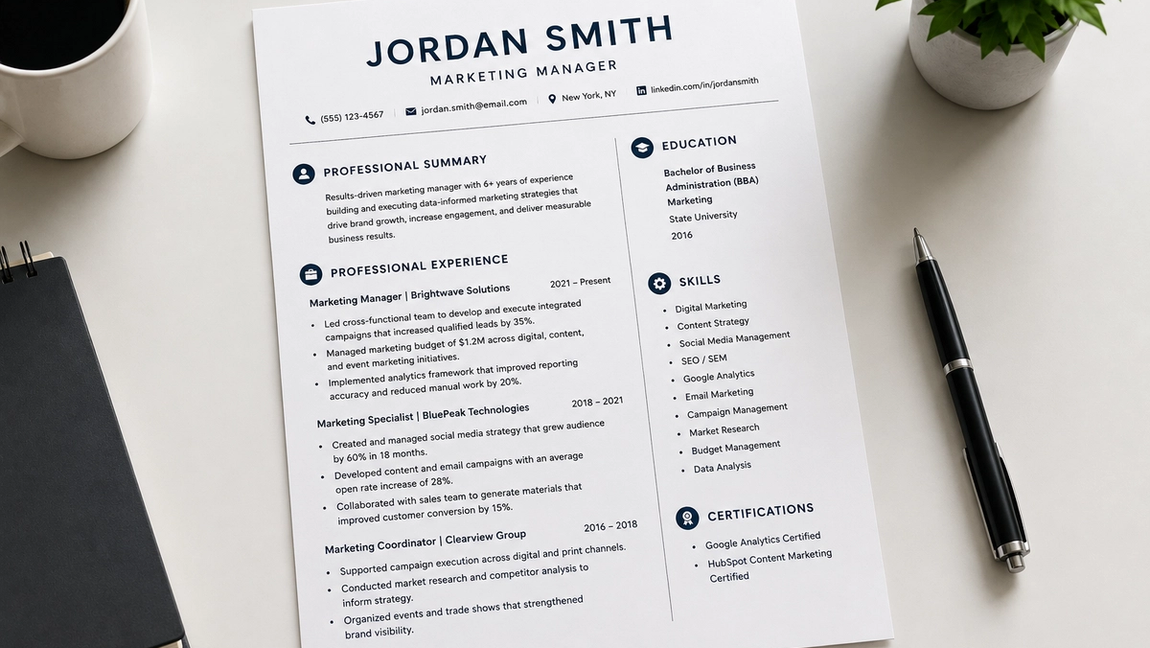
A strong resume doesn’t need bright colors, complicated graphics, or an unusual design.
It needs to make your value clear.
Hiring managers may review dozens—or even hundreds—of applications for a single position. They often spend only a short amount of time deciding whether a resume deserves a closer look.
That means your resume needs to answer several important questions quickly: What do you do? What experience do you have? What have you achieved? And why are you a strong candidate for this particular role?
Standing out isn’t about making your resume look different from everyone else’s. It’s about making the most relevant information easy to find and difficult to ignore.
Tailor your resume to the role
Sending the same resume to every employer may save time, but it can reduce your chances of getting noticed.
Different roles prioritize different skills, responsibilities, and experiences.
Read the job description carefully and identify the qualifications that appear most important. Pay attention to repeated skills, specific tools, required experience, and the language used to describe the role.
Then adjust your resume to emphasize the parts of your background that are most relevant.
This doesn’t mean copying the job description or adding experience you don’t have.
It means presenting your real experience in a way that clearly connects with the employer’s needs.
A hiring manager shouldn’t have to search through your resume to understand why you’re a good fit.
Begin with a clear professional summary
A professional summary can provide a quick introduction at the top of your resume.
Keep it focused and specific.
Explain your area of experience, strongest skills, and the type of value you provide.
Avoid broad statements such as “hardworking professional seeking an exciting opportunity.” These phrases could describe almost anyone and provide little useful information.
Instead, mention your field, years of experience when relevant, specialized knowledge, and one or two important strengths.
For example, a project manager might highlight experience leading international programs, managing cross-functional teams, and delivering projects within budget.
The goal is to help the reader understand your professional identity within a few seconds.
Focus on achievements, not only responsibilities
One of the most common resume mistakes is listing only job duties.
Statements such as “responsible for social media,” “managed projects,” or “worked with customers” explain what you were expected to do but not how well you did it.
Whenever possible, describe the result of your work.
Instead of writing that you managed a marketing campaign, explain that the campaign increased website traffic, generated new leads, or reached a specific audience.
Instead of saying you improved a process, describe how much time, money, or effort the improvement saved.
Achievements show impact.
Numbers can make results easier to understand, but not every accomplishment needs a percentage.
Launching a new program, coordinating an important event, improving team communication, training employees, managing a difficult transition, or creating a new system can all demonstrate value.
Use clear and specific language
Strong resumes are usually easy to read.
Use direct language and begin achievement statements with clear action words.
Words such as led, created, improved, managed, developed, launched, coordinated, increased, reduced, and implemented can help explain your contribution.
Avoid filling the resume with vague phrases such as “results-driven,” “team player,” “excellent communicator,” or “detail-oriented” without evidence.
Instead of saying you’re a strong leader, show where you led a team or project.
Instead of claiming you’re organized, describe a complex responsibility you successfully managed.
Specific examples are more convincing than general descriptions.
Include keywords naturally
Many employers use applicant tracking systems to organize and review applications.
These systems may search resumes for skills, job titles, qualifications, and other keywords related to the position.
Using relevant language from the job description can help your resume reflect the employer’s requirements.
If the role requests experience with project management, data analysis, customer relationship management, or a particular software platform, include those terms when they accurately describe your background.
Don’t add keywords simply to influence the system.
Recruiters still read resumes, and repeated or irrelevant terms can make the writing feel unnatural.
The goal is to use clear industry language that both technology and people can understand.
Keep the design simple
Creative designs may look impressive, but complicated layouts can make resumes difficult to read.
Use clear headings, consistent spacing, readable fonts, and enough white space to separate sections.
Important information should be easy to find.
Common sections include professional experience, education, skills, certifications, and relevant projects.
Avoid adding too many colors, graphics, charts, icons, or decorative elements unless they’re appropriate for your industry.
Some applicant tracking systems may also have difficulty reading unusual layouts or information placed inside graphics.
A simple design allows your experience to receive the attention.
Include the most relevant information
A resume doesn’t need to include every job, task, course, or skill you’ve ever had.
Focus on information that supports the type of role you’re applying for.
Older or unrelated experience can often be shortened, especially when more recent work demonstrates stronger qualifications.
Your resume isn’t a complete record of your professional life.
It’s a carefully selected summary designed to show why you’re qualified for a specific opportunity.
Removing less relevant information can make your strongest experience easier to notice.
Be thoughtful about length
The ideal resume length depends on your experience and industry.
Many early-career professionals can present their qualifications effectively on one page.
People with longer careers, technical expertise, academic work, leadership experience, or extensive projects may need two pages.
The goal isn’t to fit everything onto one page at any cost.
It’s to make sure every section adds value.
A two-page resume filled with relevant achievements is stronger than a one-page resume that’s difficult to read because the text has been made too small.
At the same time, avoid adding unnecessary detail simply to make the document longer.
Make your skills section specific
A skills section can help employers quickly identify your qualifications.
Focus on concrete skills related to the position.
These may include software platforms, technical knowledge, languages, project management methods, data tools, writing, research, design, or industry-specific expertise.
Avoid long lists of broad qualities such as leadership, communication, creativity, and problem-solving without evidence.
These abilities are important, but they’re often more convincing when demonstrated through your achievements.
Choose skills you can confidently discuss during an interview.
Proofread more than once
Small mistakes can create a negative impression, particularly in roles that require attention to detail.
Check spelling, grammar, punctuation, dates, job titles, and formatting.
Make sure verb tenses are consistent. Current roles are generally described in the present tense, while previous positions are usually written in the past tense.
Read the resume slowly rather than relying only on automated spelling tools.
It can also help to review the document in a different format or ask someone else to read it.
After working on the same resume for several hours, your brain may begin overlooking mistakes because it knows what you intended to write.
Make every section earn its place
A strong resume doesn’t try to impress employers with complicated language.
It makes relevant experience easy to understand.
Every section should support the same message: you have the skills, experience, and achievements needed to contribute in this role.
Tailor the content, focus on results, use clear language, and keep the design professional.
Your resume doesn’t need to tell your entire story.
It needs to create enough interest for the employer to want to hear the rest during an interview.
Standing out isn’t about being louder than every other applicant.
It’s about being clearer.